Metformin is one of the most commonly prescribed medications for type 2 diabetes, but many patients wonder about its effects on weight. This comprehensive review examines clinical studies and patient reports to separate fact from fiction.
Read More
Medication Side Effects Checker
← Back to Blog
Cymbalta Withdrawal Symptoms: Day-by-Day Timeline & Safe Tapering Guide
1. Introduction
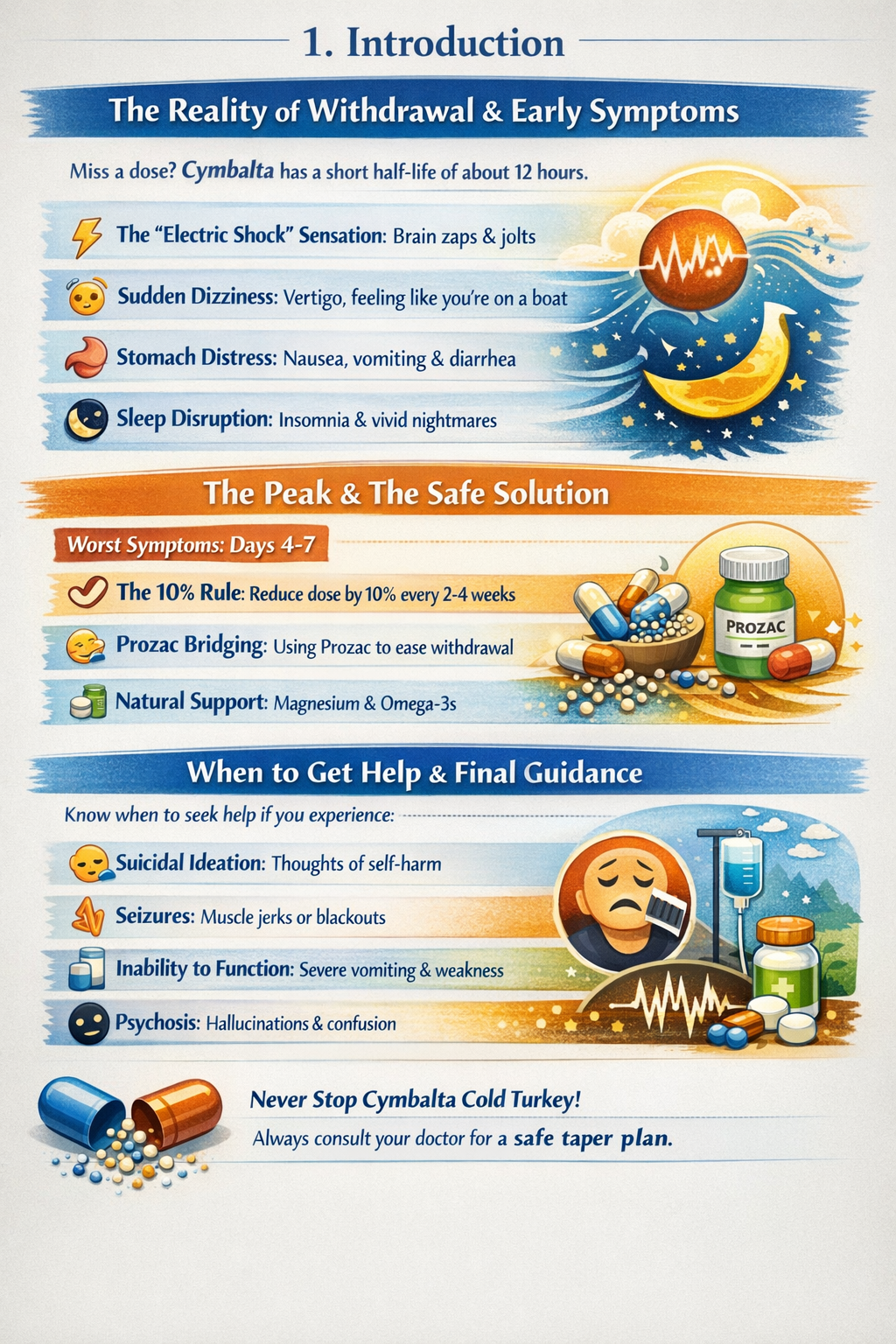
The Reality of Withdrawal & Early Symptoms
If you have ever accidentally missed a single dose of Cymbalta (duloxetine), you may have been shocked by how quickly your body reacted. Unlike some medications that take days to leave your system, Cymbalta has a notoriously short half-life of approximately 12 hours. This means that what does early Cymbalta withdrawal feel like is a question many patients ask after just one missed pill—experiencing sudden dizziness, "brain zaps," or electric shock sensations that seemingly come out of nowhere.
During the first 1-3 days, you might find yourself asking, "how to stop brain zaps from Cymbalta?" as you struggle with:
- The "Electric Shock" Sensation: Sudden jolts in your head when moving your eyes.
- Sudden Dizziness: Feeling like the floor is tilting or you are on a boat (Cymbalta withdrawal vertigo when lying down).
- Stomach Distress: Immediate nausea, vomiting, or Cymbalta withdrawal diarrhea remedy searches become common.
- Sleep Disruption: Vivid nightmares or Cymbalta withdrawal insomnia that makes rest impossible.
The Peak & The Safe Solution
The reality is that withdrawal isn't just "in your head"—it is a physiological event. Many patients report that the worst days of Cymbalta withdrawal occur between days four and seven, where symptoms like Cymbalta withdrawal anxiety and panic attacks peak, making it difficult to work or drive.
If you are asking how long does Cymbalta withdrawal last, the answer varies: acute symptoms typically resolve in 2 to 4 weeks, but some individuals suffer from protracted Cymbalta withdrawal months later. This is why the Cymbalta bead counting method for taper has become a lifeline for many—opening capsules and removing individual beads allows for micro-dosing that standard pill-splitting cannot achieve.
Unlike a typical Cymbalta taper schedule 30mg to 0, which often fails because it drops too fast at the end, the 10% reduction method respects how sensitive the central nervous system becomes during withdrawal.
Key strategies for this phase include:
- The 10% Rule: Reduce your current dose by only 10% every 2-4 weeks (e.g., 30mg to 27mg, not 20mg).
- Bridging the Gap: Some doctors suggest using Prozac to ease Cymbalta withdrawal due to Prozac's longer half-life.
- Natural Support: Addressing Cymbalta withdrawal fatigue with magnesium or omega-3s (after consulting a doctor).
- Emotional Symptoms: Recognizing Cymbalta withdrawal anger and rage as a chemical reaction, not a personal failure.
When to Get Help & Final Guidance
However, you should never attempt to navigate this process alone. How to convince doctor to help with Cymbalta taper is a common hurdle, as many physicians suggest overly rapid tapers that lead to relapse. If your current plan isn't working, you need to advocate for a slow Cymbalta taper over several months.
This guide helps you distinguish between Cymbalta withdrawal vs relapse of depression, as the symptoms often mirror each other. It is vital to know when to go to hospital for Cymbalta withdrawal, specifically if you experience:
- Suicidal Ideation: New or worsening thoughts of self-harm (Cymbalta withdrawal suicidal thoughts).
- Seizures: Any signs of Cymbalta withdrawal seizure risk (muscle jerks or blackouts).
- Inability to Function: Severe vomiting leading to dehydration or an inability to stand.
- Psychosis: Hallucinations or extreme confusion.
Remember, can you stop Cymbalta cold turkey safely? The answer is a firm no—but with a safe, slow taper and proper medical support, you can reclaim your life without unnecessary suffering. Always consult your prescribing physician before making any changes to your medication regimen.
2. Day-by-Day Cymbalta Withdrawal Timeline
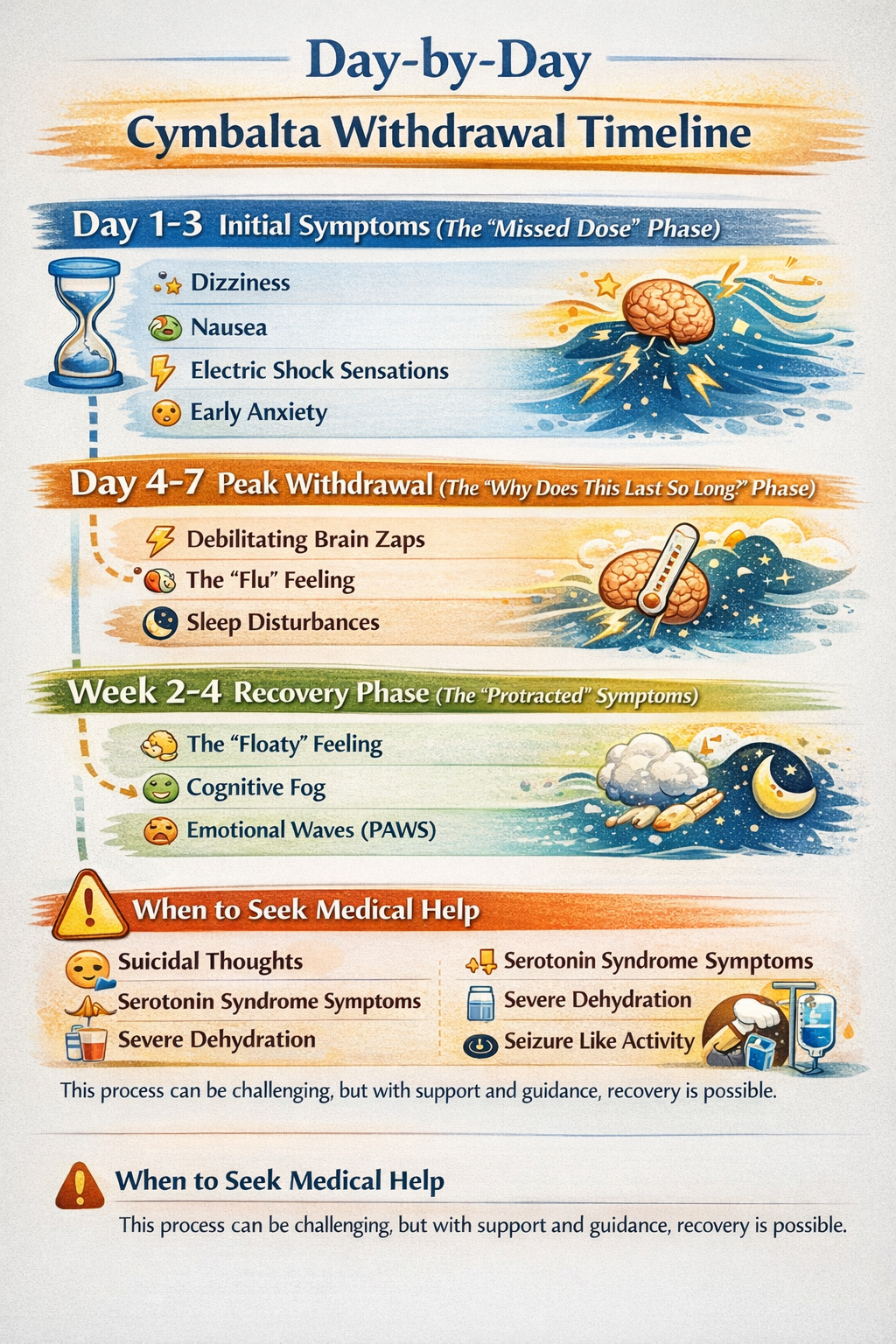
Day 1–3: Initial Symptoms (The “Missed Dose” Phase)
The clock starts ticking surprisingly fast when you miss a dose of Cymbalta (duloxetine). Because this medication has a short half-life of approximately 12 hours, the body begins to react within just 24 to 36 hours of your last dose. During these initial days—often called the “missed dose” phase—your brain is essentially trying to function without the serotonin and norepinephrine it has grown dependent on.
This chemical shift often results in a sudden onset of early withdrawal symptoms like mild dizziness, persistent headaches, and a strange “out of body” feeling. Many users also report significant cymbalta withdrawal nausea and vomiting, making it difficult to keep food down, alongside overwhelming fatigue that no amount of coffee seems to fix.
- The "Electric Shock" Emerges: If you are searching for how to cope with early cymbalta brain zaps or cymbalta withdrawal electric shock feeling when moving eyes, this is when those sensations usually begin. You might feel a sudden buzz or flicker in your head, especially when turning your head or glancing sideways.
- The Return of Anxiety: Many people look for cymbalta withdrawal anxiety tips due to a sudden spike in panic. Emotional fragility, crying spells, or unexplained sadness are common during this phase and are typically chemical reactions—not a relapse.
- Digestive Distress: If you are wondering how to stop cymbalta withdrawal diarrhea, note that this phase often brings gastrointestinal upset as the gut reacts to the drop in serotonin levels.
⚠️ Critical Context for Days 1–3
If you are experiencing these symptoms, it is important to distinguish between discomfort and danger. While nausea is common, severe dehydration is not. For those asking is it dangerous to stop cymbalta cold turkey? — doctors strongly advise against it.
If you are already in this phase, focus on hydration and small, bland meals. Many people also ask how long does cymbalta withdrawal dizziness last—the intensity of these first three days usually signals that your body is actively trying to rebalance itself.
Day 4–7: Peak Withdrawal (The “Why Does This Last So Long?” Phase)
As you move toward the end of the first week, the initial discomfort often escalates into acute physical distress. This is widely considered the peak of Cymbalta withdrawal. By this point, the drug has largely cleared your system, leaving your brain scrambling to adjust to a new normal.
- Debilitating "Brain Zaps": Searches like how to deal with cymbalta brain zaps become common here. These sensations intensify and may feel like a sudden “reset” in your head, sometimes accompanied by a whooshing sound.
- The "Flu" Feeling: Many experience cymbalta withdrawal fever and chills, night sweats, and muscle stiffness that resemble a severe flu.
- Sleep Disturbances: People often report cymbalta withdrawal nightmares so real or even sleep paralysis. Vivid dreams can feel extremely intense or frightening.
🚨 Why People Relapse Here
This is the most difficult stage. Symptoms like vertigo, anger, and emotional instability can make daily functioning feel impossible. If you are wondering should I go to the hospital for cymbalta withdrawal? — seek help if you are unable to stay hydrated for 24 hours or experiencing suicidal thoughts.
Otherwise, remind yourself that this is the peak phase—the symptoms should gradually begin to ease after this point.
Week 2–4: Recovery Phase (The “Protracted” Symptoms)
You have made it past the acute phase, but recovery is not always linear. During weeks 2 to 4, intense physical symptoms typically subside, but lingering effects may come and go in waves.
- The "Floaty" Sensation: Many describe feeling like they are “walking on a boat,” especially in visually busy environments.
- Cognitive Fog: Common complaints include memory issues, confusion, and difficulty concentrating—often described as a “cotton-filled head.”
- Emotional Waves (PAWS): You may experience sudden mood swings, irritability, or emotional numbness even weeks after stopping the medication.
💡 The "Kindling" Effect Warning
A frequently asked question is why is my second cymbalta withdrawal worse than the first? This may be due to the kindling effect, where repeated withdrawals increase nervous system sensitivity. Restarting and stopping again can make symptoms more severe.
Consistency and patience are key during this recovery phase.
When to Seek Medical Help
While most withdrawal symptoms are manageable, certain warning signs require immediate medical attention. Do not ignore the following:
- Suicidal Thoughts: If you are thinking about harming yourself, seek emergency help immediately.
- Serotonin Syndrome Symptoms: Signs include high fever, rapid heart rate, muscle rigidity, or confusion.
- Severe Dehydration: If you cannot eat or drink for over 24 hours due to vomiting, medical care is necessary.
- Seizure-like Activity: Uncontrolled shaking or loss of consciousness requires urgent evaluation.
Cymbalta withdrawal can feel overwhelming, but understanding the timeline helps you stay grounded. With proper support, hydration, and medical guidance, your body can gradually return to balance.
3. The Complete Guide to Cymbalta Withdrawal Symptoms (What to Expect & How to Cope)
The Physical Toll (Brain Zaps, Flu Symptoms & Shocks)
When your body starts adjusting to life without Cymbalta, the physical symptoms often arrive first and can feel incredibly alarming. The most infamous experience is the "brain zap"—a sudden, painless electric shock sensation in your head that can occur when you move your eyes or turn your head. Beyond the zaps, users frequently report cymbalta withdrawal vertigo (a spinning sensation), cymbalta withdrawal tinnitus (ringing in the ears), and cymbalta withdrawal paresthesia (a pins-and-needles feeling in the hands and feet). Physically, your body may feel like it is fighting the flu, leading many to search for how to stop cymbalta withdrawal nausea quickly.
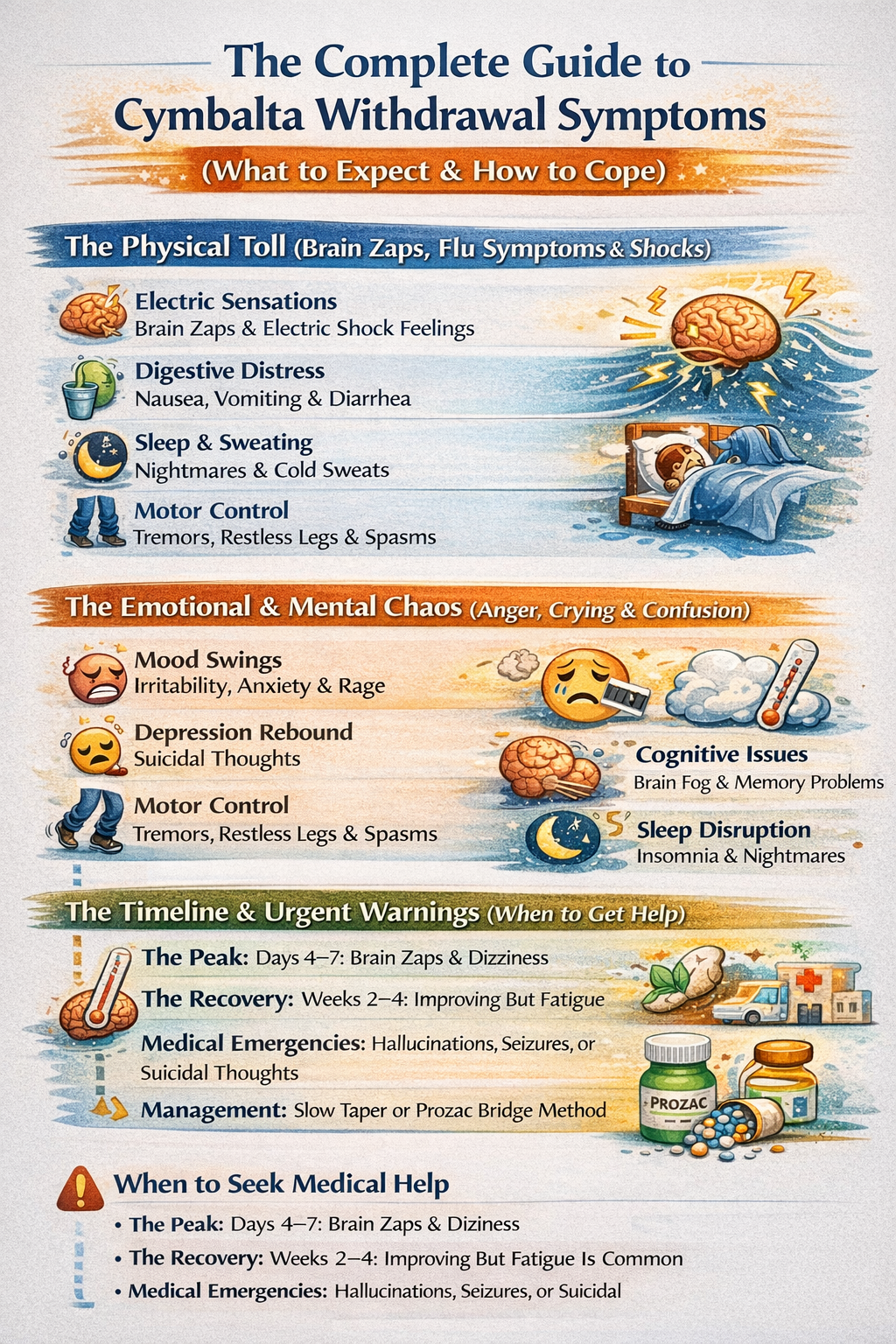
- Electric Sensations: You may experience cymbalta withdrawal electric shock feeling in the brain or limbs, often described as a short, low-voltage current.
- Digestive Distress: Symptoms can include cymbalta withdrawal nausea and vomiting, diarrhea, and reduced appetite, sometimes leading to cymbalta withdrawal weight loss.
- Sleep & Sweating: Many people report cymbalta withdrawal night sweats and vivid, disturbing cymbalta withdrawal nightmares.
- Motor Control: Watch for cymbalta withdrawal muscle spasms, tremors, or cymbalta withdrawal restless legs, which can make relaxation difficult.
The Emotional & Mental Chaos (Anger, Crying & Confusion)
Cymbalta discontinuation syndrome doesn’t just affect the body—it can significantly impact your emotional and mental state. The sudden drop in serotonin and norepinephrine may trigger unexpected cymbalta withdrawal crying spells, intense irritability, or even feelings of detachment from reality (depersonalization). Some individuals experience sudden panic attacks or heightened emotional sensitivity. It is especially important to be aware of cymbalta withdrawal anger and rage, which can be confusing for both patients and their families. Mentally, many people struggle with cymbalta withdrawal brain fog and confusion, making it difficult to focus or complete daily tasks.
- Mood Swings: Includes cymbalta withdrawal irritability, aggression, and heightened cymbalta withdrawal anxiety.
- Depression Rebound: Be alert for cymbalta withdrawal suicidal thoughts, especially in younger individuals—this requires immediate medical attention.
- Cognitive Issues: Difficulty concentrating, memory lapses, and a sense of disconnection are commonly reported.
- Sleep Disruption: Beyond nightmares, cymbalta withdrawal insomnia may leave you exhausted but unable to rest properly.
The Timeline & Urgent Warnings (When to Get Help)
Understanding how long cymbalta withdrawal lasts can help you stay prepared during the process. In most cases, symptoms begin within 12 to 72 hours after a missed dose, peak during the first two weeks, and gradually improve over the following weeks. However, some individuals may continue experiencing symptoms longer, especially if the medication was stopped too quickly.
- The Peak: Days 4 to 7 are often the most intense, especially for cymbalta withdrawal dizziness and brain zaps.
- The Recovery: Weeks 2 to 4 typically bring improvement, though cymbalta withdrawal fatigue and headaches may persist.
- Medical Emergencies: Seek immediate help if you experience seizures, hallucinations, serotonin syndrome symptoms (such as fever or rigid muscles), or thoughts of self-harm.
- Management: The safest approach is a gradual cymbalta taper schedule (such as the 10% reduction method) or consulting a doctor about a prozac bridge to ease withdrawal symptoms.
4. Safe Tapering Schedule: How to Avoid Severe Withdrawal
The 10% Reduction Method (Gold Standard)
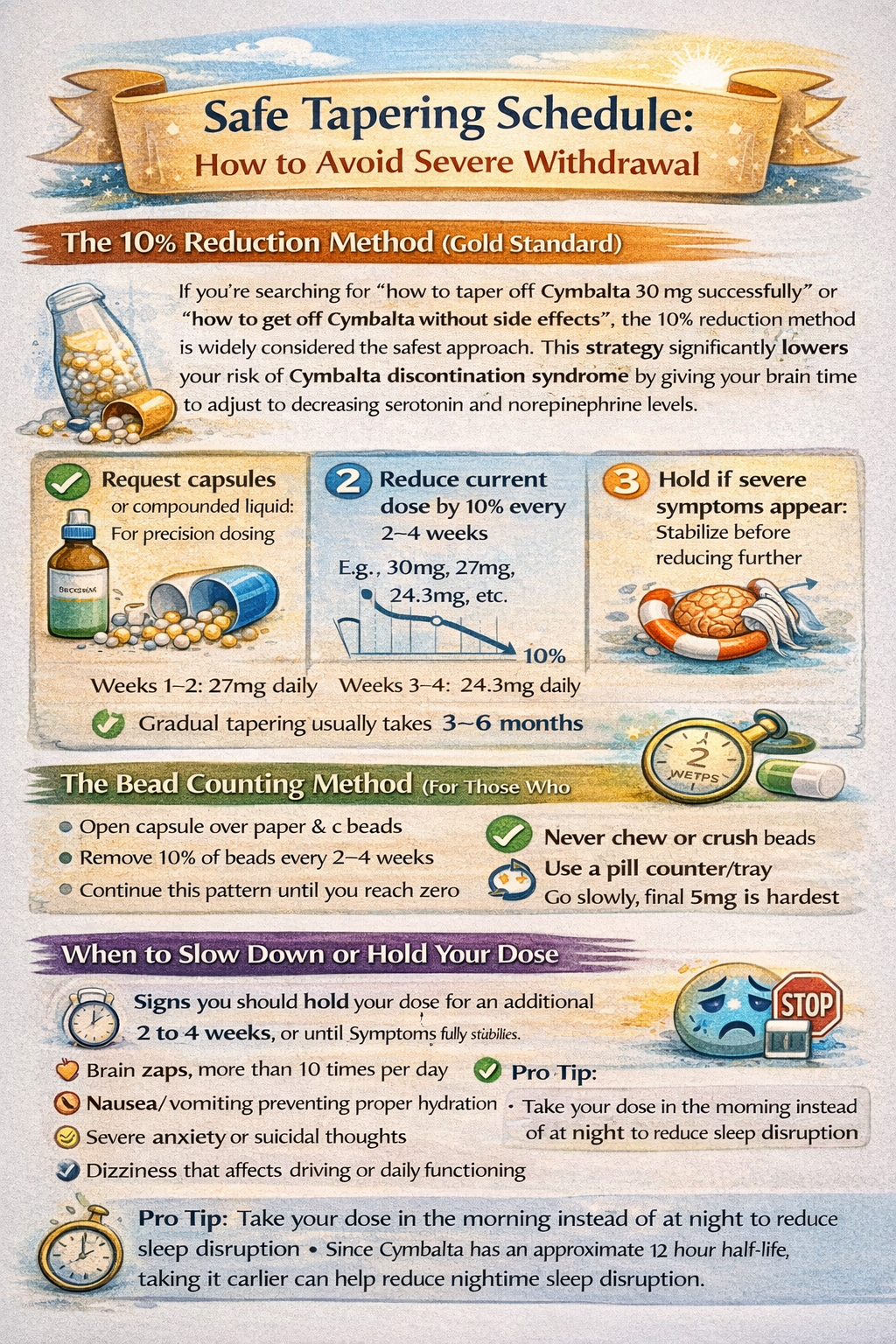
If you're searching for "how to taper off Cymbalta 30 mg successfully" or "how to get off Cymbalta without side effects", the 10% reduction method is widely considered the safest approach. This strategy significantly lowers your risk of Cymbalta discontinuation syndrome by giving your brain time to adjust to decreasing serotonin and norepinephrine levels.
Unlike aggressive tapers that reduce doses by 50% or more, this method lowers your current dose by just 10% every 2 to 4 weeks—or only when you feel stable. Many people searching for "what is the safest way to stop Cymbalta" find this method life-changing because it helps prevent intense symptoms like brain zaps and severe dizziness.
How to follow the 10% method:
- Step 1: Ask your doctor for immediate-release capsules or a compounded liquid from a compounding pharmacy (essential for precise dosing)
- Step 2: Reduce your current dose by no more than 10% every 2–4 weeks
- Step 3: "Hold" at your current dose if withdrawal symptoms appear—wait until they resolve before reducing further
Example taper schedule (starting at 30mg → 0mg):
- Weeks 1–2: 27mg daily
- Weeks 3–4: 24.3mg daily
- Weeks 5–6: 21.9mg daily
- Continue this pattern until you reach zero
This gradual approach answers the common question, "how long does it take to taper off Cymbalta safely?" For many people, a full taper takes 3 to 6 months, while long-term users may need 6 to 12 months to avoid severe symptoms.
The Bead Counting Method (For Those Who Can't Get Compounded Formula)
If you're searching for "Cymbalta bead counting method step by step" or "how to taper off Cymbalta when doctor won't help", this method is a practical alternative.
Cymbalta capsules contain many tiny beads. Reports from patient communities suggest a 60mg capsule contains ~273 beads, while a 30mg capsule contains ~136 beads. By carefully removing a calculated number of beads, you can create custom doses for gradual tapering.
How to use the bead counting method:
- Open the capsule carefully over a clean, dry surface
- Count the total number of beads inside and record it
- Calculate 10% of the total beads and remove that amount
- Close the capsule (or mix beads with applesauce if needed)
- Reduce by another 10% every 2–4 weeks as tolerated
Important safety tips:
- Never crush or chew the beads—this can cause rapid absorption and side effects
- Store removed beads safely in case you need to increase your dose again
- Use a pill counter or white paper to avoid losing beads
Many people searching for "Cymbalta withdrawal brain zaps how to stop them" report that bead counting helps reduce these sensations because it allows for extremely precise dose adjustments. The final stages—especially the last 5mg—are often the most challenging, so taper slowly.
When to Slow Down or Hold Your Dose
Even with a slow taper, difficult symptoms can occur. If you're searching for "Cymbalta withdrawal symptoms unbearable help" or "how to cope with Cymbalta withdrawal dizziness and nausea", the most important rule is simple: listen to your body and hold your dose.
There is no benefit to rushing. Reducing too quickly can lead to relapse, prolonged symptoms, or stopping the taper altogether. If symptoms become intolerable, returning to the previous dose and tapering more slowly is often recommended.
Signs you should hold your current dose:
- Brain zaps occurring more than 10 times per day
- Nausea or vomiting preventing proper hydration or eating
- Severe anxiety or suicidal thoughts
- Dizziness that affects driving or daily functioning
- Sleeping less than 2–3 hours per night for several days
How long should you hold?
Stay at your current dose for an additional 2 to 4 weeks, or until symptoms fully stabilize. In later stages, some individuals may need 6 to 8 weeks between reductions. This is normal and part of a safe tapering process.
Pro tip: If insomnia is your main symptom, consider taking your dose in the morning instead of at night. Since Cymbalta has an approximate 12-hour half-life, taking it earlier can help reduce nighttime sleep disruption.
5. How to Get Cymbalta Withdrawal Help
If you are searching for cymbalta withdrawal help, you are likely wondering how to ease cymbalta withdrawal symptoms without losing your progress. The good news is that withdrawal is not something you have to endure silently. Beyond the standard medical advice, there are specific supplements and lifestyle adjustments that can make the difference between suffering and simply managing the transition.
Supplements to Calm the Nervous System
While you must always consult your doctor first, some people find relief using targeted nutrients. Omega-3 fatty acids are widely recommended for brain health and may help reduce neuro-inflammation during withdrawal. Magnesium glycinate is often suggested to support muscle relaxation, improve sleep quality, and reduce anxiety. There are also anecdotal reports about using CBD for cymbalta withdrawal, particularly for calming irritability and improving sleep patterns. In more severe cases, a physician may recommend a prozac bridge for cymbalta withdrawal, where a longer-acting medication is used temporarily to smooth the transition and reduce symptom intensity.
Lifestyle Tweaks for Immediate Relief
Physical symptoms like nausea and vertigo can feel overwhelming, but simple adjustments can provide fast relief. To manage nausea, try eating small, frequent meals instead of large portions. Hydration for cymbalta withdrawal is essential—dehydration can worsen dizziness, fatigue, and brain fog. Many individuals also find that using compression socks for cymbalta withdrawal dizziness helps stabilize blood flow, reducing lightheadedness and preventing fainting when standing up.
Building Your Support System
You do not have to navigate this process alone. If you are struggling with how to deal with an unsupportive doctor during cymbalta withdrawal, consider seeking a second opinion or consulting a psychiatrist experienced in deprescribing. Joining a support group or exploring natural remedies for cymbalta withdrawal can provide reassurance, shared experiences, and emotional support. Following a safe cymbalta taper schedule—such as the commonly recommended 10% reduction method—or discussing a prozac bridge with your doctor can make the transition significantly more manageable and sustainable.
6. When to Seek Medical Help for Cymbalta Withdrawal: Warning Signs You Should Never Ignore
Stopping Cymbalta (duloxetine) is rarely a smooth process, and while symptoms like "brain zaps," nausea, or dizziness are common, certain reactions cross the line from uncomfortable to dangerous. Because Cymbalta has a short half-life of approximately 12 hours, withdrawal symptoms can hit hard and fast—sometimes within just 24 hours of a missed dose. It is crucial to distinguish between standard discontinuation syndrome and a medical emergency. You should never feel embarrassed about seeking emergency care—withdrawal is a physiological event, not a failure of willpower.
🚨 Go to the Emergency Room (ER) Immediately
If you or a loved one experience any of the following symptoms, do not wait. These are signs of severe neurological or psychiatric reactions that require immediate medical intervention to ensure safety.
- Suicidal Thoughts or Self-Harm: Any thoughts of hurting yourself, feeling like life isn’t worth living, or making a plan. This is the highest priority.
- Seizures: Even without a history of epilepsy, abrupt changes in brain chemistry during withdrawal can trigger seizures.
- Serotonin Syndrome Symptoms: High fever, rigid muscles, confusion, rapid heart rate, or shivering.
- Hallucinations or Psychosis: Seeing or hearing things that aren't there, or experiencing severe paranoia.
- Inability to Care for Yourself: Severe dizziness, inability to stand or walk, confusion, or disorientation.
📞 Call Your Doctor Within 24 Hours
Some symptoms may not be immediately life-threatening but can become serious if ignored. These often indicate that your taper plan needs urgent adjustment.
- Severe Vomiting or Diarrhea: Inability to keep food or water down for more than 12 hours, increasing risk of dehydration and electrolyte imbalance.
- Fainting or Severe Vertigo: Dizziness leading to falls or loss of consciousness.
- Debilitating "Brain Zaps": Electric shock sensations so intense they interfere with driving, working, or focusing vision.
- Worsening Depression or Panic: Return of symptoms stronger than before treatment, including sudden rage, aggression, or panic attacks.
🩺 Signs You Need a Prescription Adjustment (Not Necessarily the ER)
In many cases, the safest solution is simply slowing down the taper. Reach out to your psychiatrist if you experience persistent symptoms like these.
- "Pins and Needles" Sensations: Burning, tingling, or numbness in the hands, feet, or limbs (paresthesia).
- Electric Shock Sensations: Common "brain zaps" that are uncomfortable but not dangerous unless they cause disorientation.
- Persistent Insomnia or Nightmares: Difficulty sleeping for multiple nights due to vivid dreams or restlessness.
- Hypomania: Sudden bursts of energy, impulsive behavior, or unusually elevated mood that feels out of character.
Disclaimer: This content is for informational purposes only and does not constitute medical advice. Always consult a qualified healthcare professional before making any decisions regarding your medication, especially when changing your dose or stopping Cymbalta.
7. Conclusion
The Reality Check & Validation:
Let’s be honest: deciding to stop Cymbalta is brave, but the journey can feel isolating. If you are currently experiencing cymbalta withdrawal insomnia or crying spells that seem to come out of nowhere, please know that you are not alone, and you are not "going crazy." These intense reactions, often described as discontinuation syndrome symptoms, happen because your brain is working hard to rebalance its chemistry after adjusting to the medication. Many people trying to quit face the frustrating reality of cymbalta withdrawal nausea and vomiting or feeling like they have the flu. Acknowledging these struggles is the first step to overcoming them.
The Strategy & Patience:
The medical consensus is clear: withdrawal is real, but it is manageable with a safe taper schedule. Rather than focusing on a fast exit, prioritize how to taper off cymbalta without side effects by slowing down significantly. The gold standard is the 10% reduction method (often called cymbalta bead counting), which involves reducing your dose by just one-tenth every two to four weeks. While this takes months, it preserves your quality of life. For those struggling with specific fears, there are practical solutions:
- Combating brain fog: Use the cymbalta bead extraction method to make micro-cuts of 5% or less if the 10% drop feels too harsh.
- Managing mood swings: If you feel rage or deep sadness, hold your current dose (do not reduce further) until you stabilize.
- Seeking "Cymbalta withdrawal help near me": Look for compounding pharmacies that can create liquid suspensions for smaller, gentler reductions.
More Blog Posts
Does Metformin Cause Weight Gain? What the Research Says
Managing Ozempic Side Effects: Nausea and Other Common Issues
Ozempic (semaglutide) has become a popular treatment for type 2 diabetes and weight management, but its gastrointestinal side effects can be challenging. Learn evidence-based strategies to minimize discomfort while benefiting from this medication.
Read More
Tylenol and Ibuprofen: Safe Together or Risky Combination?
Many people alternate between acetaminophen (Tylenol) and ibuprofen for pain relief, but is this practice safe? We analyze the pharmacological interactions and clinical guidelines to help you make informed decisions about pain management.
Read More
Why Does Lexapro Cause Weight Gain? Understanding the Mechanisms
Lexapro (escitalopram) is an effective SSRI antidepressant, but weight gain is a common concern. This article explores the physiological reasons behind this side effect and offers practical advice for managing weight while on medication.
Read More
How to Stop Dizziness from Blood Pressure Meds
Practical strategies to manage orthostatic hypotension from antihypertensives.
Read More
Prozac Insomnia: How Long Does It Last?
Understanding the timeline for SSRI-related sleep disturbances.
Read More
Side Effects of Stopping Statins Suddenly
The risks and proper protocols for discontinuing cholesterol medications.
Read More
Can I Drink Alcohol with Antibiotics?
Which antibiotics interact with alcohol and the potential risks.
Read More
Adderall and Caffeine Side Effects
The dangerous combination of stimulants and its impact on your health.
Read More
Does Gabapentin Cause Hair Loss?
Examining the evidence behind this concerning side effect.
Read More
Managing Amlodipine-Induced Swelling: A Patient's Guide
Effective strategies for managing peripheral edema caused by calcium channel blockers.
Read More
Prednisone Moon Face: How Long to Go Away
Understanding and managing corticosteroid-induced facial swelling.
Read More
Can You Take Benadryl with Xanax?
The risks of combining CNS depressants and safer alternatives.
Read More
Zoloft vs Lexapro Side Effects
Comparing two popular SSRIs and their side effect profiles.
Read More
Best Time to Take Synthroid to Avoid Side Effects
Optimizing levothyroxine absorption and effectiveness.
Read More
Managing Weight Gain from Antidepressants
Strategies to counteract medication-induced weight changes.
Read More
Beta Blocker Withdrawal Symptoms Timeline
What to expect when tapering off these heart medications.
Read More
SSRI Withdrawal: What to Expect
Understanding discontinuation syndrome and how to minimize symptoms.
Read More
Birth Control Pills and Mood Swings
How hormonal contraceptives can affect your emotional health.
Read More
Natural Alternatives to Proton Pump Inhibitors
Lifestyle changes and supplements to reduce acid reflux without medications.
Read More
Can You Take Tylenol With Amoxicillin? A Comprehensive Guide
When dealing with common infections like strep throat, sinus infections, or even a toothache, your doctor may prescribe amoxicillin, a widely used antibiotic. At the same time, you might experience fever, body aches, or pain — symptoms that prompt many people to reach for Tylenol (acetaminophen). But a common question arises: Can you take Tylenol with amoxicillin?
Read More
Ozempic Side Effects: How Long Does It Last? Plus Benefits for Prediabetes & PCOS
Ozempic, a medication containing semaglutide, has quickly become one of the most talked-about treatments in recent years. Originally developed to help people with type 2 diabetes manage their blood sugar levels How Long Does It Last?
Read More
Antibiotics for Sinus Infection: Best Treatments, Uses, and Side Effects Explained
Sinus infections, also known as Sinusitis, are a widespread condition that can leave you dealing with stubborn congestion, facial pressure, headaches How to treat?
Read More
Dupixent Side Effects: What You Need to Know Before and After Treatment
Living with conditions like eczema, asthma, or chronic sinusitis can be challenging, and treatments such as Dupixent have brought relief to many patients. How to treat?
Read More